
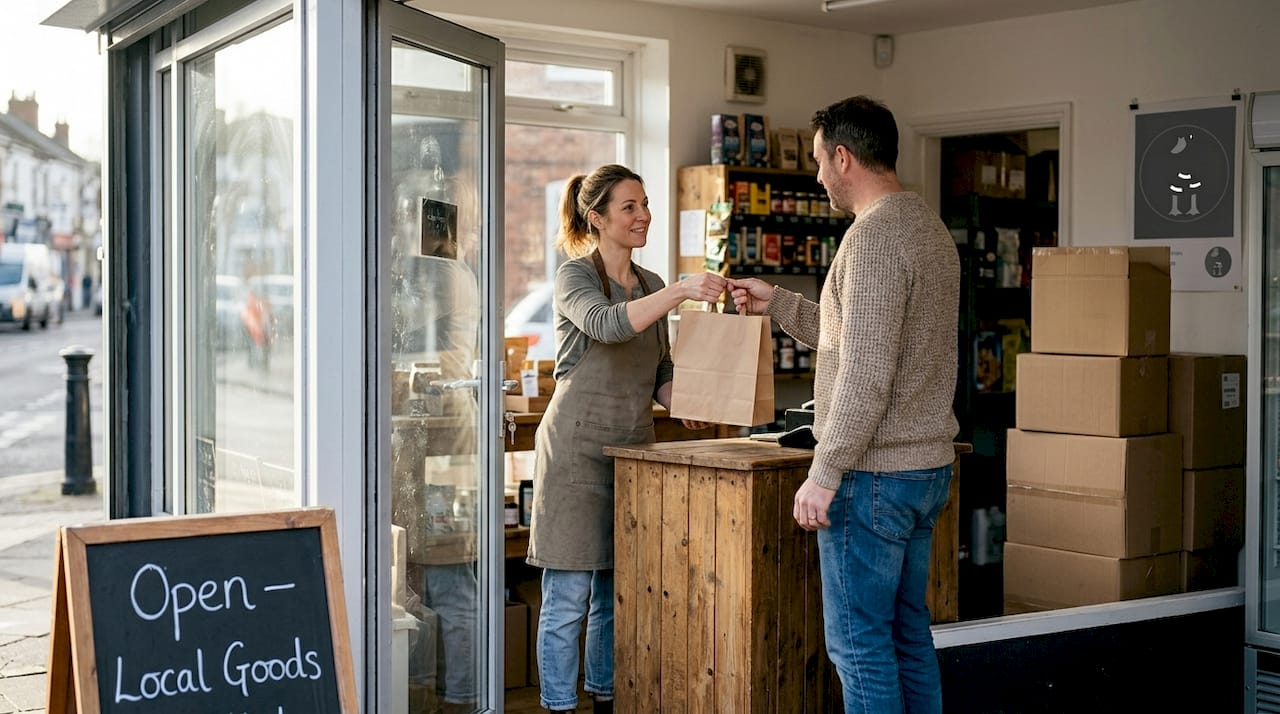
Every day, potential customers in your area open their phones and type something like “plumber near me” or “coffee shop near me.” 76% of these searches lead to a physical visit within 24 hours. That is an extraordinary conversion window. Yet many local businesses in the UK are either invisible in these results or wasting money chasing them the wrong way. The good news is that appearing for ‘near me’ searches is not about luck or stuffing your website with keywords. It is about understanding how Google actually works and using the right combination of signals, tools, and targeting to put your business in front of people who are ready to act right now.
Table of Contents
- Understanding ‘near me’ advertising: What it really is
- How Google understands and ranks ‘near me’ searches
- Key methods for effective ‘near me’ advertising in the UK
- Common pitfalls and expert tips for ‘near me’ campaigns
- The ROI of ‘near me’ strategies: Facts that matter
- Putting it all together: Your next steps for ‘near me’ advertising
- Boost your local visibility with expert help
- Frequently asked questions
Key Takeaways
| Point | Details |
|---|---|
| Proximity matters most | Google prefers businesses physically close to the searcher’s location for ‘near me’ results. |
| Optimize your business profile | A complete Google Business Profile and accurate location data are essential for success. |
| Hybrid strategies work best | Use both paid ads and organic SEO to capture more local ‘near me’ searchers. |
| Avoid keyword stuffing | Using ‘near me’ excessively is less effective than focusing on real local signals. |
| Mobile leads dominate | Most ‘near me’ searches happen on mobiles, so make local info easy to find on all devices. |
Understanding ‘near me’ advertising: What it really is
Let’s clear something up straight away. ‘Near me’ advertising is not simply about adding the phrase “near me” to your website copy. As the guide to near me search from Search Engine Land explains, it refers to targeted digital marketing strategies optimised for proximity-based queries. In other words, it is a combination of signals, settings, and content that tells Google your business is the right answer for someone searching nearby.
For UK businesses, this means focusing on three core elements:
- Location-based keywords: Terms that include your town, postcode, or neighbourhood alongside your service.
- Google Business Profile: Your free listing that feeds directly into Google Maps and the local pack (the top three map results).
- Targeted paid ads: Campaigns set to show only within a defined radius of your premises.
UK shoppers use ‘near me’ queries because they want speed and convenience. They are not browsing. They are deciding. That shift in intent is what makes local search optimisation so valuable for businesses that rely on foot traffic or local service calls.
“The businesses that win ‘near me’ searches are not always the biggest. They are the ones with the clearest, most consistent local signals.”
Google determines proximity using your device’s GPS, your IP address, and your search history. Relevance comes from how well your profile and content match the query. Prominence is built through reviews, citations, and engagement. All three factors work together.
How Google understands and ranks ‘near me’ searches
Understanding the mechanics behind ‘near me’ rankings gives you a real advantage. Google does not simply find the nearest business. It weighs up three factors: proximity, relevance, and prominence. As Google’s local ranking signals confirm, GPS data, IP address, and search history all feed into how Google prioritises results for a given user.
Here is how ‘near me’ ranking differs from a traditional city-based search:
| Factor | Traditional city search | ‘Near me’ search |
|---|---|---|
| Location signal | City name in query | Device GPS or IP |
| Intent | Research or comparison | Immediate action |
| Distance weighting | Lower priority | High priority |
| Mobile dominance | Moderate | Very high |
| Profile completeness | Helpful | Critical |
Mobile devices now drive the vast majority of ‘near me’ queries. Someone sitting in their car outside your street is not going to scroll past page one. They will call the first business that looks credible and is clearly open. This is why the role of Google Ads in local visibility has grown so significantly. Paid placements appear above the organic results, giving you immediate presence even if your organic ranking is still building.
Distance expectations also vary by business type. A restaurant searcher expects results within one or two miles. Someone searching for a boiler repair service is often willing to travel further, or expects the provider to come to them. Google accounts for this by adjusting the radius dynamically based on the category and the density of nearby options.

Key methods for effective ‘near me’ advertising in the UK
Now for the practical part. Location targeting, radius settings, and Local Services Ads are among the most effective tools available to UK businesses running ‘near me’ campaigns. Here is how to use them well:
- Set a precise radius: In Google Ads, target by postcode or set a mile radius around your location. For most high-street businesses, five miles is a sensible starting point. For mobile service providers, ten to twenty miles is more appropriate.
- Use location extensions: These attach your address, phone number, and a map pin directly to your ad. They increase click-through rates and build trust instantly.
- Enable ad scheduling: Show your ads only when your business is open. Paying for clicks at 2am when you are closed is money wasted.
- Leverage ‘open now’ signals: Keep your Google Business Profile hours accurate and up to date. Google uses this to filter results for users who need someone available immediately.
- Test dynamic keyword insertion: This automatically inserts the user’s search term into your ad headline, making it feel highly relevant to their specific query.
Pro Tip: Do not ignore Local Services Ads (LSAs). These appear above standard Google Ads for many trade and service categories, and you only pay when a customer contacts you directly through the ad. For plumbers, electricians, and similar trades, LSAs can deliver exceptional value.
For a fuller breakdown of your options, the local search ads guide covers the full range of formats available in 2026, and simple search strategies walks through how to structure campaigns without overcomplicating things.
| Method | Speed of results | Cost model | Best for |
|---|---|---|---|
| Google Search Ads | Immediate | Pay per click | Any local business |
| Local Services Ads | Immediate | Pay per lead | Trades and services |
| Local Pack (organic) | Weeks to months | Free (time investment) | All businesses |
| Organic SEO | Months | Time and/or agency fee | Long-term growth |

Common pitfalls and expert tips for ‘near me’ campaigns
Here is something that surprises many business owners. Google largely ignores the literal phrase “near me” when it appears in your website text. Only 6 to 31% of top-ranking results actually contain the phrase in their on-page content. What matters far more is the strength of your location signals, the quality of your Google Business Profile, and the volume and recency of your reviews.
Common mistakes to avoid:
- Keyword stuffing: Writing “best plumber near me in London near me” reads as spam to both Google and real users.
- Ignoring reviews: A business with 4.7 stars and 80 reviews will almost always outrank a competitor with 4.9 stars and 4 reviews.
- Inconsistent NAP data: Your Name, Address, and Phone number must be identical across your website, Google Business Profile, and any directories. Even small differences confuse Google.
- Neglecting mobile experience: If your website loads slowly or is hard to navigate on a phone, you will lose the click even if you win the ranking.
“Proximity and profile signals matter more than keyword repetition. Focus your energy on what Google actually measures.”
Pro Tip: Use natural “near you” language in your website copy rather than forcing “near me” phrases. For example, “We serve customers across South Manchester and the surrounding areas” reads naturally and still signals your location clearly.
For businesses running their own campaigns, optimising Google Ads campaigns is an ongoing process, not a one-time setup. And if you are tempted to manage everything yourself, why avoid DIY Google Ads explains the hidden costs that often make self-managed campaigns more expensive than they appear.
The ROI of ‘near me’ strategies: Facts that matter
Let’s talk numbers. The 76% visit rate and 28% purchase rate associated with ‘near me’ searches make this one of the highest-converting traffic sources available to local businesses. Compare that to a typical display advertising click-through rate of under 1%, and the difference is stark.
| Metric | ‘Near me’ search | Display advertising |
|---|---|---|
| Visit within 24 hours | 76% | Not applicable |
| Purchase rate | 28% | Under 5% |
| Mobile share of searches | Over 80% | Varies |
| Average intent level | Very high | Low to medium |
The case for combining paid and organic strategies is strong. A business appearing in both the paid ads and the local pack for the same query effectively doubles its visibility on the page. Users see the brand twice, which builds familiarity and trust before they even click. To make every pound work harder, maximise Google Ads budget with tighter targeting, negative keywords, and regular bid reviews.
For UK businesses in competitive local markets, even a modest monthly ad spend of £300 to £500, when properly targeted, can generate a measurable uplift in enquiries within the first few weeks.
Putting it all together: Your next steps for ‘near me’ advertising
As hybrid approaches combining organic and paid consistently outperform either strategy alone, the smartest move is to build both in parallel. Google’s AI is also becoming better at understanding intent without relying on exact keyword matches, which means your signals and reputation matter more than ever.
Here is a prioritised action list to get started:
- Claim and complete your Google Business Profile: Add photos, accurate hours, services, and a description that includes your location naturally.
- Audit your NAP consistency: Check that your name, address, and phone number match across every online directory and your own website.
- Set up a Google Ads campaign with radius targeting: Start with a tight radius and expand based on performance data.
- Enable location extensions on all ads: This single step can noticeably improve your click-through rate.
- Request reviews actively: After every job or visit, ask satisfied customers to leave a Google review. Make it easy by sending a direct link.
- Track calls and conversions: Use Google Ads call tracking to understand which campaigns are actually generating enquiries, not just clicks.
- Review and adjust monthly: Check which keywords, locations, and times of day are performing best, and shift your budget accordingly.
For a clear comparison of your long-term options, Google Ads vs SEO breaks down the trade-offs so you can make an informed decision about where to invest first.
Boost your local visibility with expert help
If you have read this far, you already understand more about ‘near me’ advertising than most of your local competitors. The next step is putting it into practice without wasting budget on trial and error. At Marashi, we are a UK-based, family-run team with over ten years of experience managing Google Search Ads for local businesses just like yours. We handle the targeting, the optimisation, and the ongoing adjustments so you can focus on running your business. Whether you are starting from scratch or want to improve an existing campaign, our boost UK business visibility service and local search ads guide are the ideal starting points. No long-term contracts. No complicated funnels. Just results.
Frequently asked questions
Does my business need to use ‘near me’ keywords on the website?
No. Only 6 to 31% of top results contain the phrase in their text. Google prioritises proximity signals, profile completeness, and reviews over exact keyword matches on your pages.
How far will ‘near me’ ads reach customers from my shop?
It depends on your business type. Radius varies by category: restaurants typically reach one to three miles, while service businesses can extend to ten or twenty miles, especially when fewer local options exist.
Is paid advertising or organic SEO better for ‘near me’ searches?
Neither alone is optimal. A hybrid approach works best, with paid ads delivering immediate placement and organic SEO building a sustainable local presence over time.
Why is Google Business Profile important for ‘near me’?
GBP integration is crucial because it feeds directly into the local pack and Google Maps results, which are the first thing most users see when searching for a nearby business.